Last night you decided to go to the gym. This morning the alarm goes off, and you hit snooze. Then again. Then, half awake, you remember why you set it. The gym.
But it's cold. And the gym is open tomorrow too. And you went yesterday, so one day off is nothing. And now that you think about it, you're almost out of clean gym shirts anyway.
By the time the excuses run out, so has the morning. You never left the bed.
Later you'll tell yourself you lacked motivation. You didn't. Motivation was never the thing standing in your way. Watch what actually happened up there: you decided, and then, in the few seconds before you moved, a small voice handed you reasons to stay. The cold. The shirts. The day off. Those reasons felt true, but they arrived on a schedule, right after the decision, right before the action. That gap has a name. It is hesitation, and it is where almost everything you mean to do goes to die.
Here is a way to picture what happens in that gap. Your brain is not built to make you great. It is built to keep you alive. It is a bodyguard, not a coach. And a bodyguard has one job: get you away from anything unfamiliar, anything uncomfortable, anything that looks like risk. A cold gym at six in the morning reads, to that ancient part of you, as risk. So it does its job. It floods you with reasons to stay home, where it is warm and safe and nothing can go wrong. If it were fully in charge, you would never leave the bed. You would lie there, fed and safe and slowly disappearing.
Motivation can't beat this, because the bodyguard is faster than motivation. By the time you're negotiating, you've already lost. The excuses are winning the argument you didn't know you were having.
So you don't win by arguing. You win by not giving the argument time to start.
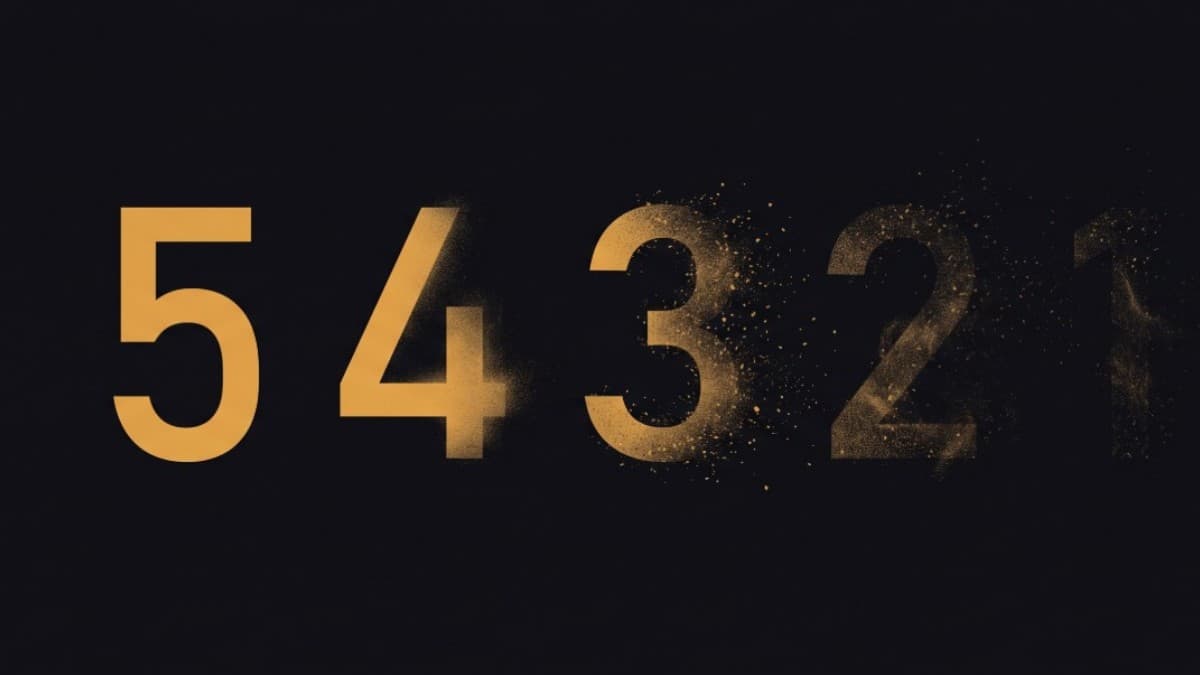
The trick is to move before the voice speaks. The moment you decide, you have a few seconds, maybe five, before hesitation arrives to talk you out of it. So use them. Count down, five, four, three, two, one, and on one, move. Feet on the floor. Not because counting is magic, but because it gives your body something to do while the excuses are still loading, and once you're moving, the argument is already over. You don't talk yourself into it. You act, and let the reasons catch up to a body that's already up.
This is why the shoe company didn't say "do it." They said "just do it." That small word is the whole thing. Just. As in, skip the part where you think about it. The thinking is where you lose.
And it is never only the gym. You are in a meeting and you have something to say. You feel it, the good idea, right there. Raise your hand now, in the first second, and you say it. Wait, and the bodyguard wakes up. What if it's stupid. What if they laugh. Your heart picks up, your face warms, and the moment closes. Same gap. Same voice. Same five seconds deciding whether the thing in you gets out or stays in.
You will hesitate. That part is not a flaw you can delete; it is how you are built. But you don't have to lose to it. You just have to move first.